Reviewing the 2004 NBA Draft
statistically inclined musings

This was a fascinating class. 5 All-Stars, one of whom is a first-ballot HOF, and six players with 15+ year careers. Lots of what-ifs (Delonte West seemingly had it all), and some of the most fascinating developmental trajectories in NBA history. Note that there’s not much structure here; I’m just trying to observe and write what comes to mind. This will be consistently updated as I make insights, and I’ll eventually tweet it out when there’s enough players analyzed.
Trevor Ariza
Birthday: June 30, 1985
Class: Freshman
Draft Age: 19.0
Shoeless height: 75.25
SR: 101.25
Weight: 198
WS: 79
Lane Agility: 10.94
3Q Sprint: 3.1
Standing Vert: 27.5
Max Vert: 33
Bench Press: 13Ariza needs to go in the Hall of Insane Outlier Development, right next to Jaylen Brown, Dejounte Murray, Zach Lavine, et al. Matter of fact, he might be the headliner. Let’s preface by highlighting his age: Ariza was very young. 6/30/1985 bday for 2004 draft is like Ron Holland age. Basically, he was just under 19 on draft day. He coupled that with impressive length but below average vert and average speed.

These are some especially terrible shooting numbers. 50% from the line on high volume (so it’s not noisy/low sample size like KPJ or Zach Lavine), and he shot a similarly terrible 24% from 3 on 76 total attempts? And follow it up with a paltry 51% on 2s (pretty terrible for someone who is 6’8, as you’d obviously assume he gets some easy shots not accessible to someone of smaller frame). I have no rim numbers, but it’s pretty likely this guy had bad touch at the rim.
terrible touch on 2s
terrible touch on 3s
terrible touch on FTs
So obviously he’d be a terrible shooter in the NBA. Maybe he develops a bit cus he’s so young, but he’s definitely not going to be known as a shooter in the league, right?
wrong.
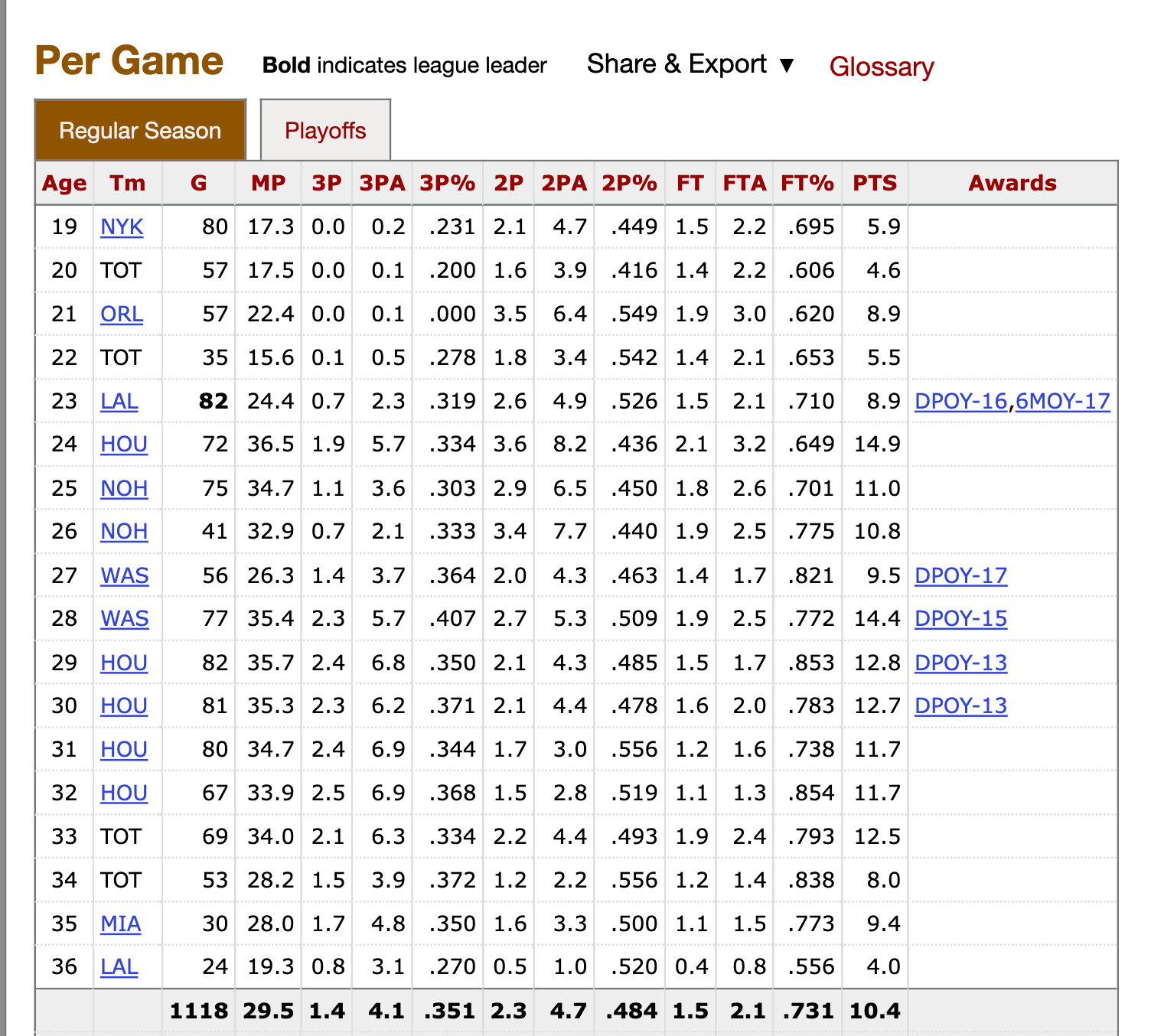
How did this guy go from shooting 0.5 3PA to 5.7 3PA in the course of 2 seasons. Well, of course he went to Houston and starting shooting lights out. In fact, all of his highest 3PR seasons are with Houston. I’m not sure if Houston just has generational shooting coaches, an ability to inspire the best out of their players, or both.
According to this report, Ariza did have the greenest of lights. Shoutout Chuck Hayes.
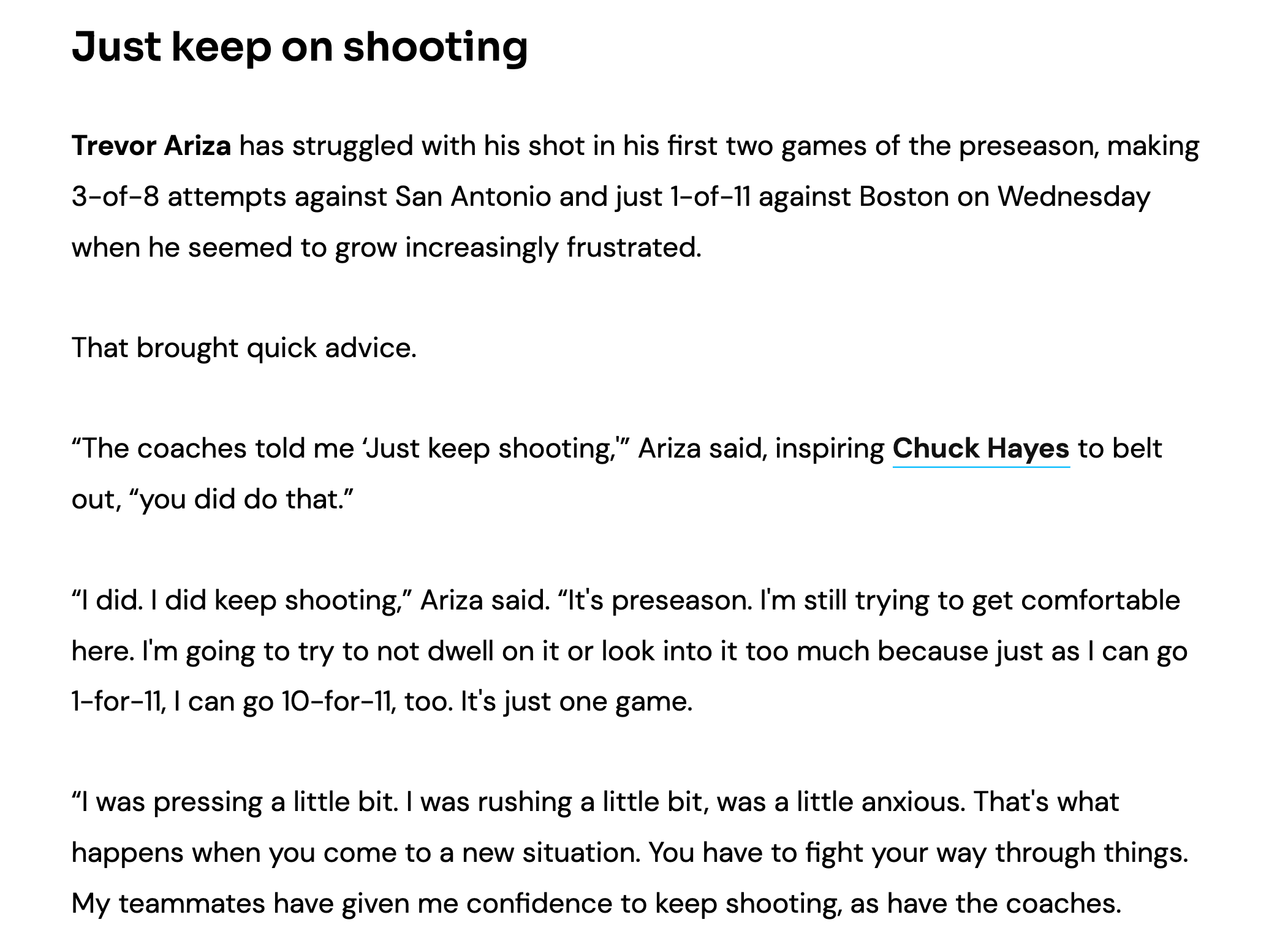
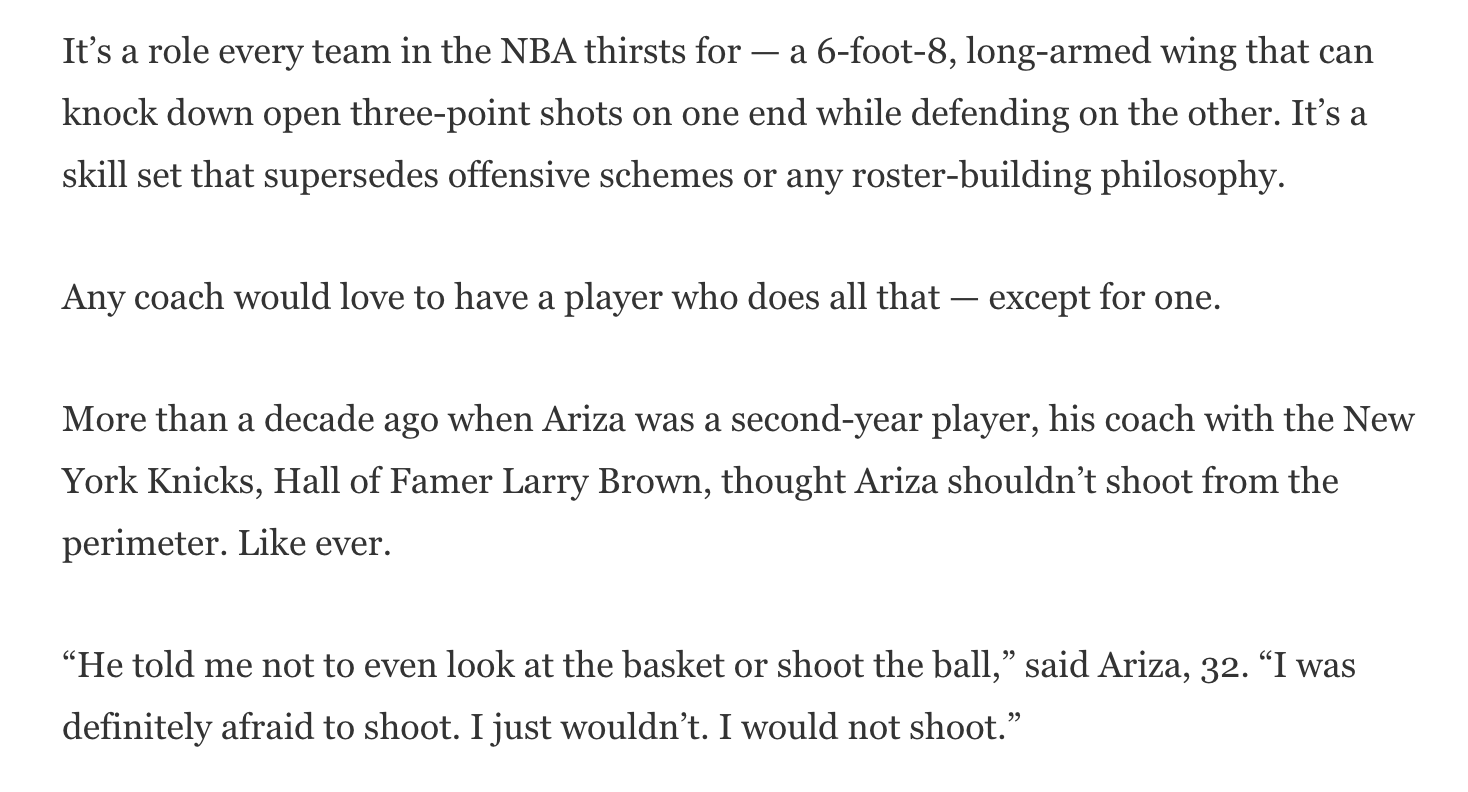
Ariza definitely came a long way from here:
Trevor’s shooting improvements, however, weren’t simply illustrated in a rise of 3PA volume though; let’s look at the FT. He immediately went from 50% as an 18 year old to 69% as a 19 year old. But it gets crazier: Ariza slowly pushed his FT% from the 60s to the 80s over the course of his 18 year career. The guy with terrible 2P/3P/FT touch would hit 85% FT/35% 3P not once but twice in his career. Even UCLA Ariza would have thought you were trolling.
Throughout his NBA career, Ariza was pretty terrible on 2s; career 48% doesn’t even do it justice since he just stopped taking high volume of 2s once he hit his 30s. Still, it’s not hard to see why Ariza stuck around for 18 years. He was 6’8, he could shoot well, and he could guard. Why wouldn’t you extend someone like that?
I think this is a pretty cool lesson in valuing archetypes. I do feel like I’ve zagged with my anti-archetype bias: I prefer elite raw production than a pre-established distribution of production. But this Ariza archetype is pretty infallible. He was bagless, unable to ever score super efficiently inside the arc, and yet he managed to stick around for nearly 20 years anyway by providing a low-friction skillset.
Some people have talked about the death of the 3&D archetype, and maybe Ariza career arc was a product of the era. Regardless, props to Ariza for extending his career with a legit shot. Perhaps we should be valuing these long wing types with strong D and shooting upside more, since they stick around longer? Longevity is king, after all.
Now, for the million dollar question. How did Trevor Ariza extend his career with terrible interior touch, perimeter touch, and FT touch? Prolly some combination of elite steals and passing.
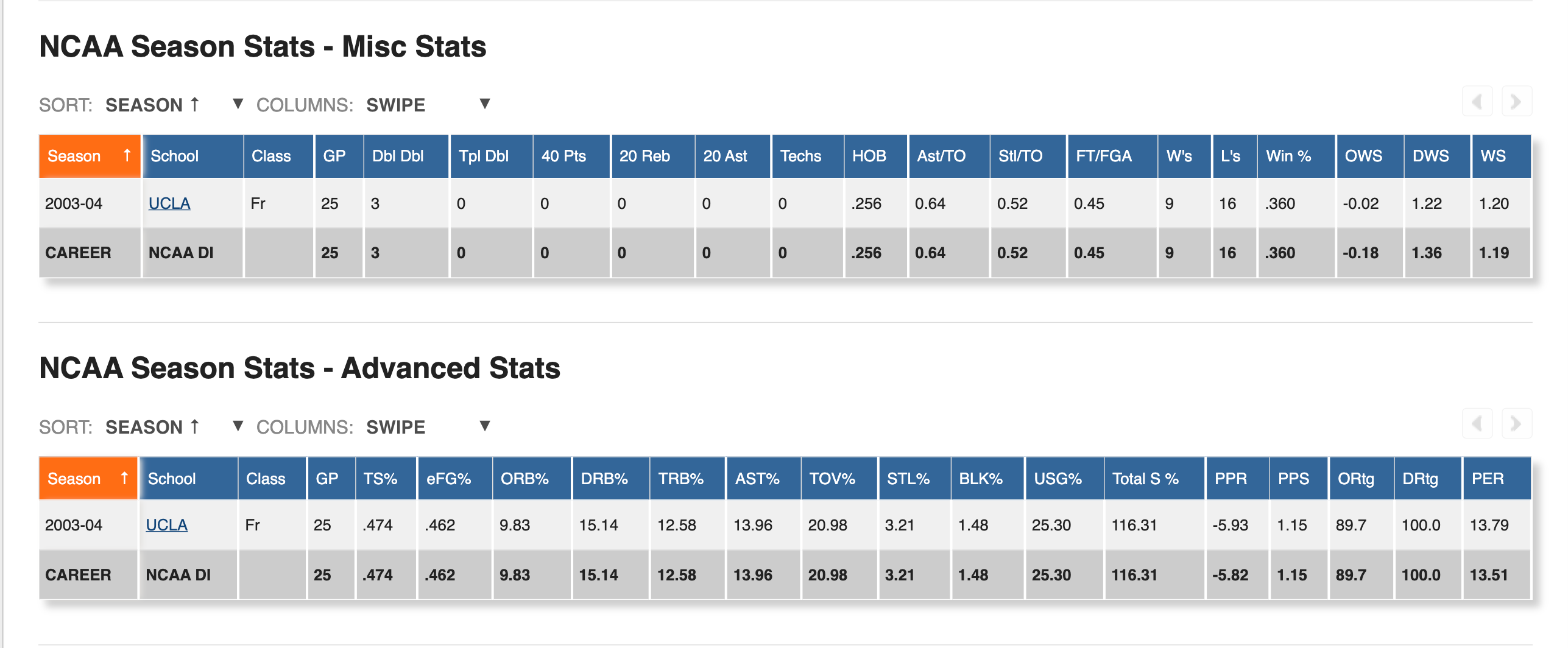
Clockwork. 9.8% oreb, 3.2% steal, and 14% assist. The story is the same every time. Wing with elite athleticism and strong feel as a freshman ends up outperforming expectation.! I’ve def become more of an offensive rebounding merchant recently, but you’ll see that manifested in more of my writing.
Yes, Ariza seems to have strong feel. 3.2% steal and 14% assist is quite good for a 6’8 18 year old. But he also did turn the ball over quite a bit. 21% TO is pretty bad, as is 0.64 A:TO. 4 fouls per 40. Also, 14% assist is cool, but assist% is undeniably a function of touches/usage (it’s in the formula), and he did have a 25% usage. There’s levels to this shit, and while Ariza had good feel for size/age, he wasn’t this insane prospect hiding in plain sight. There were obvious risks with Ariza, even with our retrospective knowledge of rate-stats.
Anyways, let’s do a query to find comps for this oreb-assist-steal skill integration.
Ariza is 9.8% oreb, 14% assist, and 3.2% steal. Let me first convince you that this is an important skill integration.
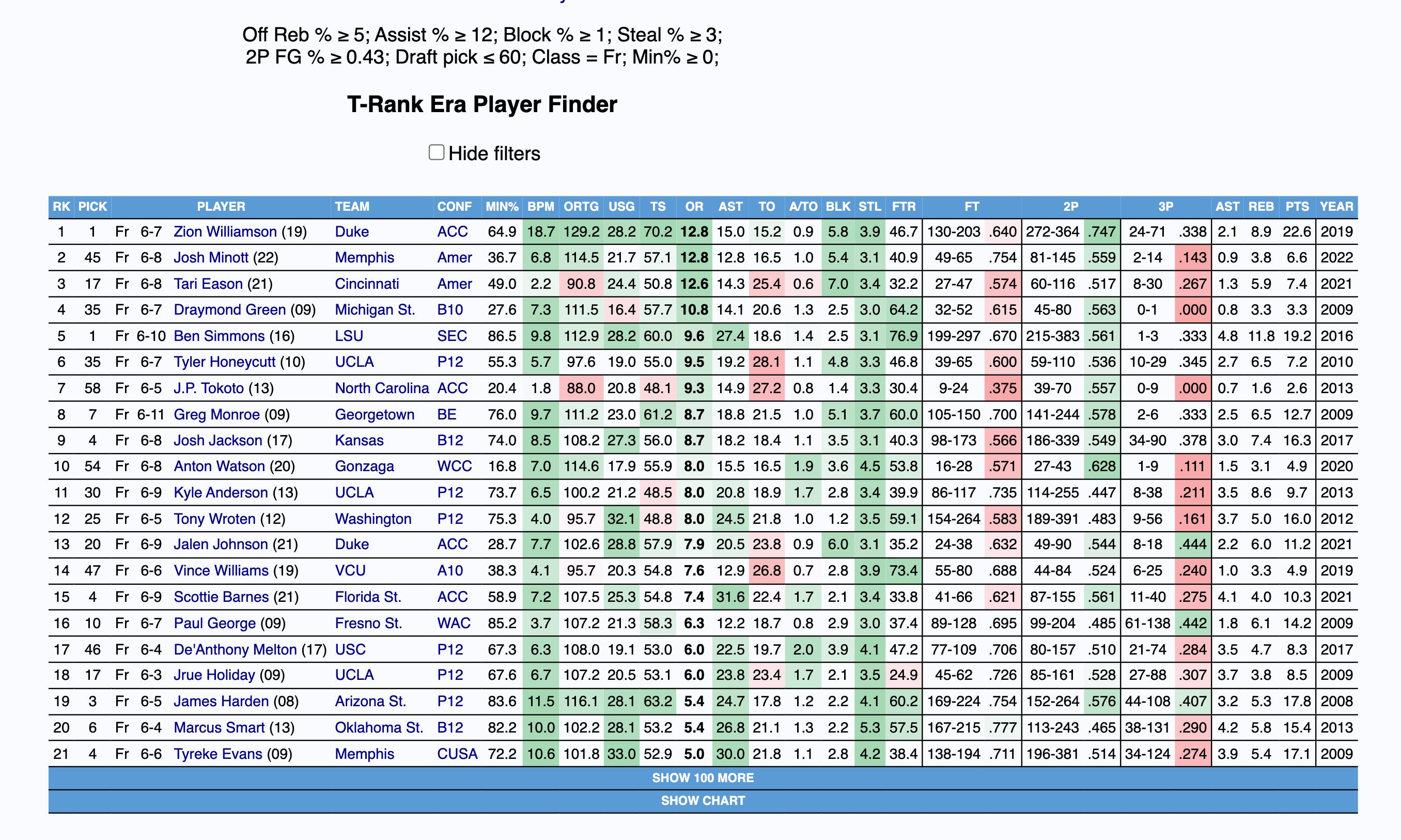
This is one of my greatest queries ever. Some of the most fascinating dev stories of all time. Freshman Draymond, PG, Vince Williams, and Jalen Johnson are elite pulls.
But we have to note, Ariza improved as a shooter but he clearly didn’t reach the heights of many of these guys. And the reason is pretty simple: Ariza’s freshman season was simply not as productive as many of these players. He had a terrible 89.7 offensive rating on 25.3% usage, and much of that was probably spurred by the high TOs (21% TO). Obviously its harder to maintain strong offensive rating on high usage, but 89.7 is truly outlier, esp relative to guys on this list
For instance, look at JP Tokoto is on this list. Not only is his general touch cooked, but at least Ariza had the excuse of high usage; Tokoto put up a terrible 88 offensive rating and 27% TO on pretty low usage (21% usage). Tyler Honeycutt is another polar bear; 97.6 offensive rating doesn’t seem terrible on first glance, but putting that up with 28.1% TO on only 19% usage is uniquely bad.
Perhaps the closest statistical doppelganger to freshman Ariza is freshman Tari Eason. He had a similarly bad 90 otrg, but on 24.4% usage. Both were 50s FT shooters with okay 3P volume and 51% on 2s. Pretty much the same assist rates and A:TO. They even have very similar height and WS (basically 6’8 with 7’2 WS).
Biggest difference to me is that Tari is better on the boards and better shotblocking. Still, he was a year older and playing at a worse conference. This is as close of a comparison as you’ll see at this level.
You know what makes me even more confident about this comparison? Tari Eason magically shot pretty well the next season as a sophomore. Going from 57% FT and 27% 3P to 35% 3P and 80% FT in literally one season is insane, esp accounting for the volume difference from 3 and improved competition.
So we have two freshman, both of whom were poor touch from all 3 levels, but had a strong steal and assist rate in common. Both were also the same size.
Let’s call this the OAS Theory: players with a combination of strong functional feel, youth, and length are more likely to make strides as a shooter.
https://x.com/100guaranteed/status/1814024086185820359
For reference, let’s look at Draymond Green’s shooting numbers across 4 years:
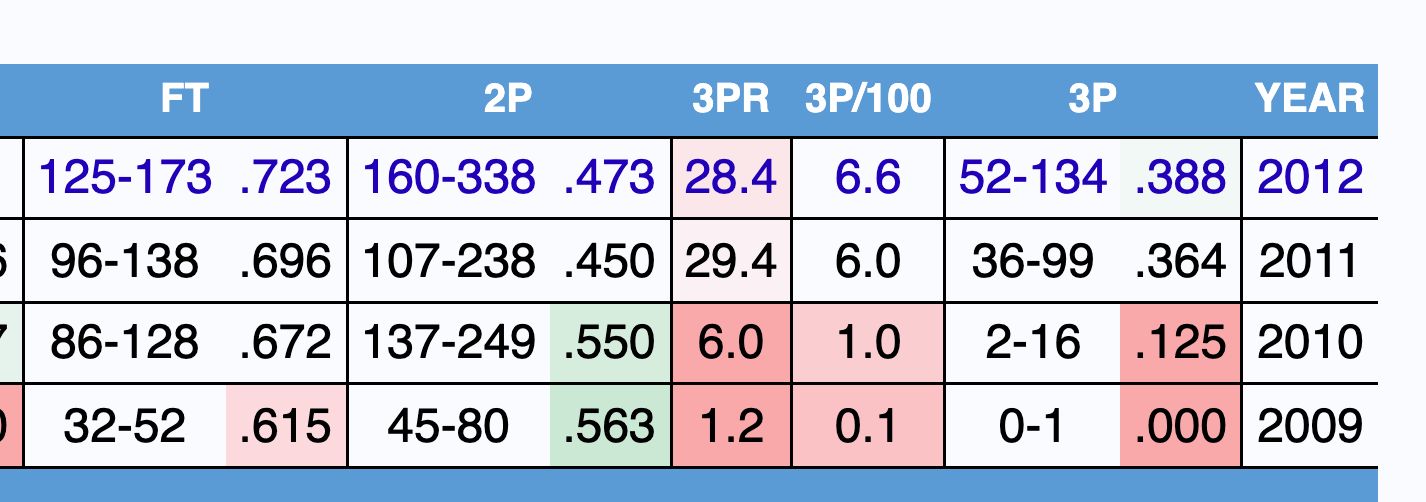
The lengthy wing with strong assist/steals as a freshman ended up making unforseen developments as a shooter. How unsurprising.
From the 89 otrg/25usg forward with terrible touch to a high value 3&D perimeter wing for some of the most potent offenses in NBA history, Trevor Ariza is undoubtedly one of the most fascinating dev stories of all time. And honestly, Tari might be next up on that path.
We’re already seeing rapid shooting development from Mr. Eason, and while he’s struggled a bit to begin his career, perhaps he can extend his career as a legit floorspacer like Ariza. Based off this totally not reductive, highly sophisticated analysis, I’m starting to get confident that his shot can be a real strength in this league.
Ricky Minard
Birthday: September 11, 1982
Class: Senior
Draft Age: 21.75
Shoeless height: 75.25
SR: 101.25
Weight: 198
WS: 79
Lane Agility: 10.94
3Q Sprint: 3.1
Standing Vert: 27.5
Max Vert: 33
Bench Press: 13Well above-average standing reach and 3Q sprint, above average lane agility time, and solid wingspan, all relative to position. Great bench press for height. Below average vertical.
Seems like a pretty viable archetype: super quick and long, at the expense of some bounce. I would expect this type of player to be a high octane steals threat, with some outside chance at strong oreb% and potentially good finishing depending on how good the handle is (since vert is so bad).
Now, onto the impact stuff:
There’s a pretty clearly good team here. Positive connotation polar bear.
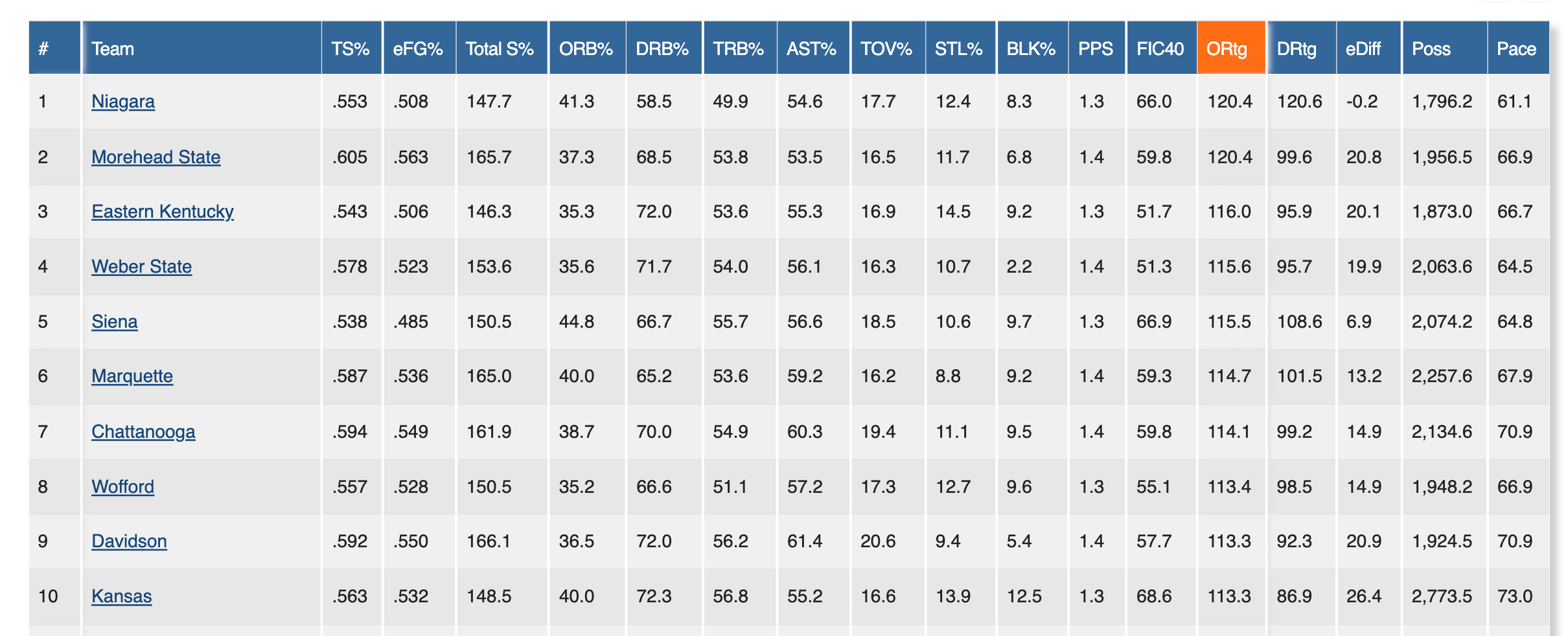
In 2002-03, Morehead State led the nation in offensive rating, and they did it by combining a microscopic turnover rate (16.5 TO%, second-lowest here) with supremely efficient shooting (56.3 eFG%, by far the best here). The leader of this team was none other than Mr. Minard.
If you’re still not convinced, Morehead led the nation in offensive rating during Minard’s junior season (2002-03), ranked 23rd in o-rating in Minard’s senior season (2003-04), and then ranked 228th in o-rating once Minard had graduated. Part of this is obviously the contemporaneous departure of Chez Marks, but Minard’s impact of the team is hard to deny.
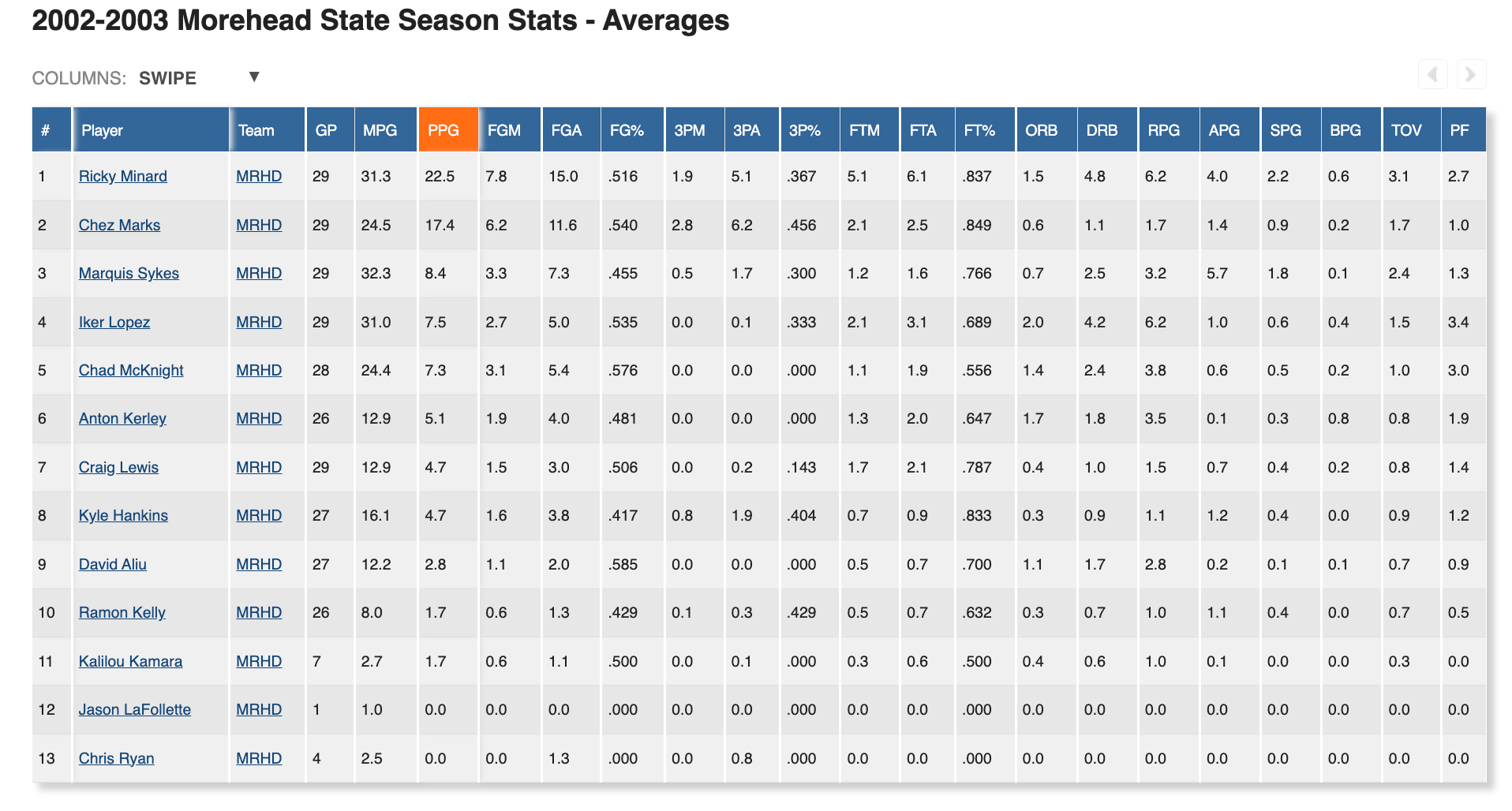
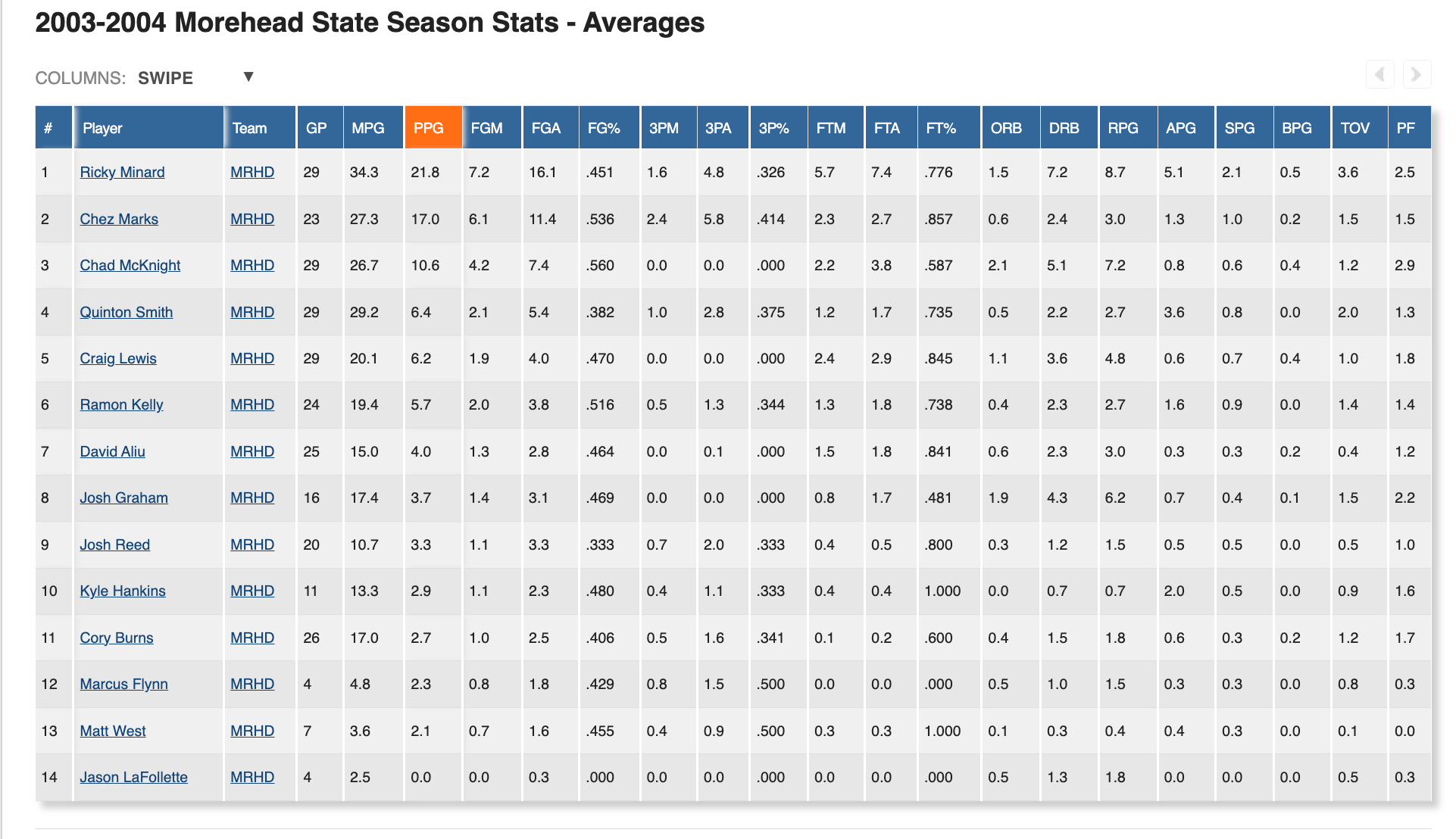
There is no question Minard was the leader of this hyper-efficient offense. His junior season was especially impressive, as he led the team in points, took a ridiculous 10 2s and 5 3s per game, got to the line 6 times a game, and was an excellent rebounder/defender to boot. All while averaging 4 assists a game. Leading the team in points, FTs, FGAs, rebounds, and steals two years in a row is especially wild.
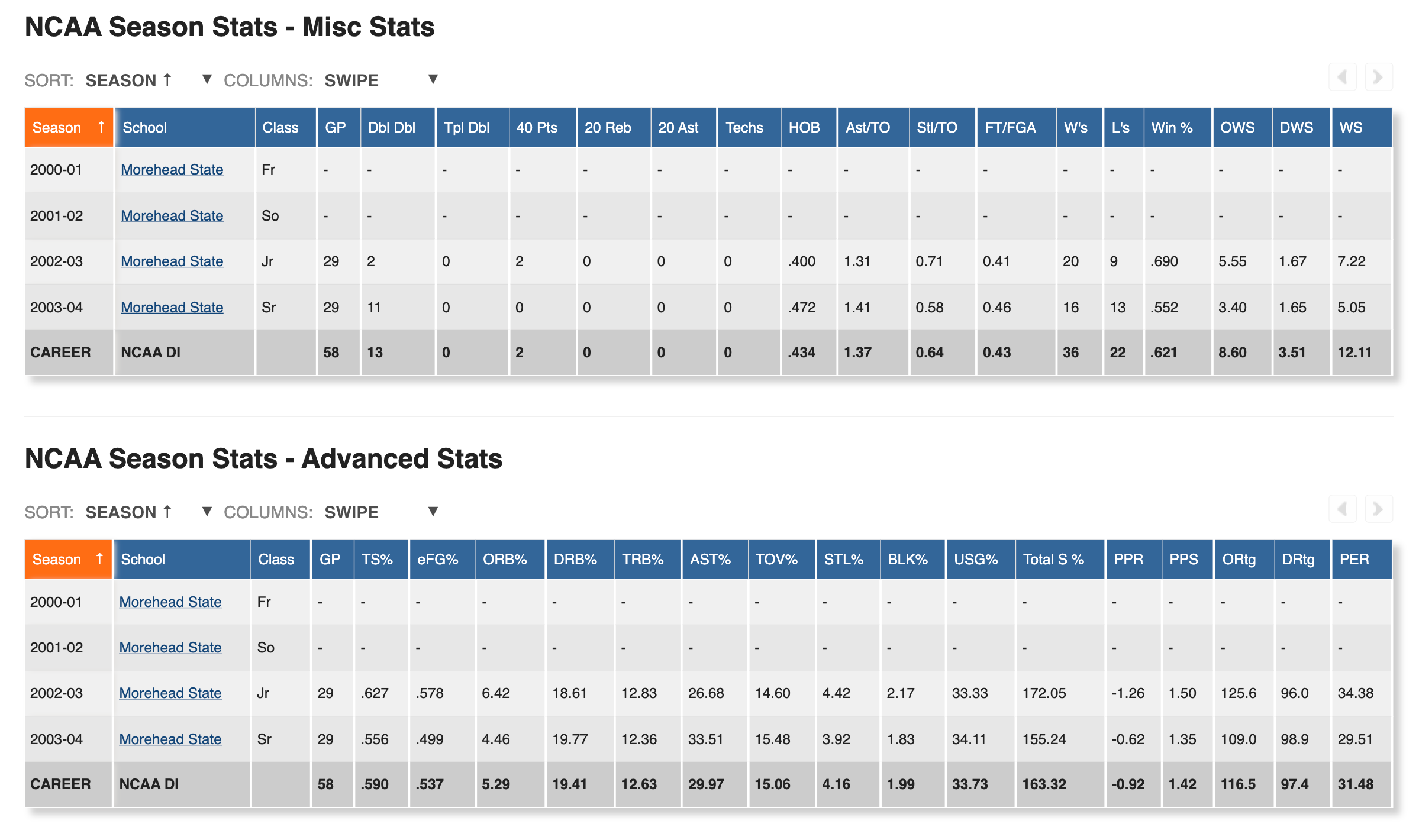
This just corroborates what we saw in the per-game states. 2% block and 4% steal is ridiculous, especially for someone with such a high usage. 34.38 PER literally led the entire nation that year. 6% oreb and 27% assist is such a wild skill integration: he was rebounding like a forward but facilitating for the most efficient team in America.
And yet, 125.6 otrg on 33% usage might be the most outrageous thing he pulled off.
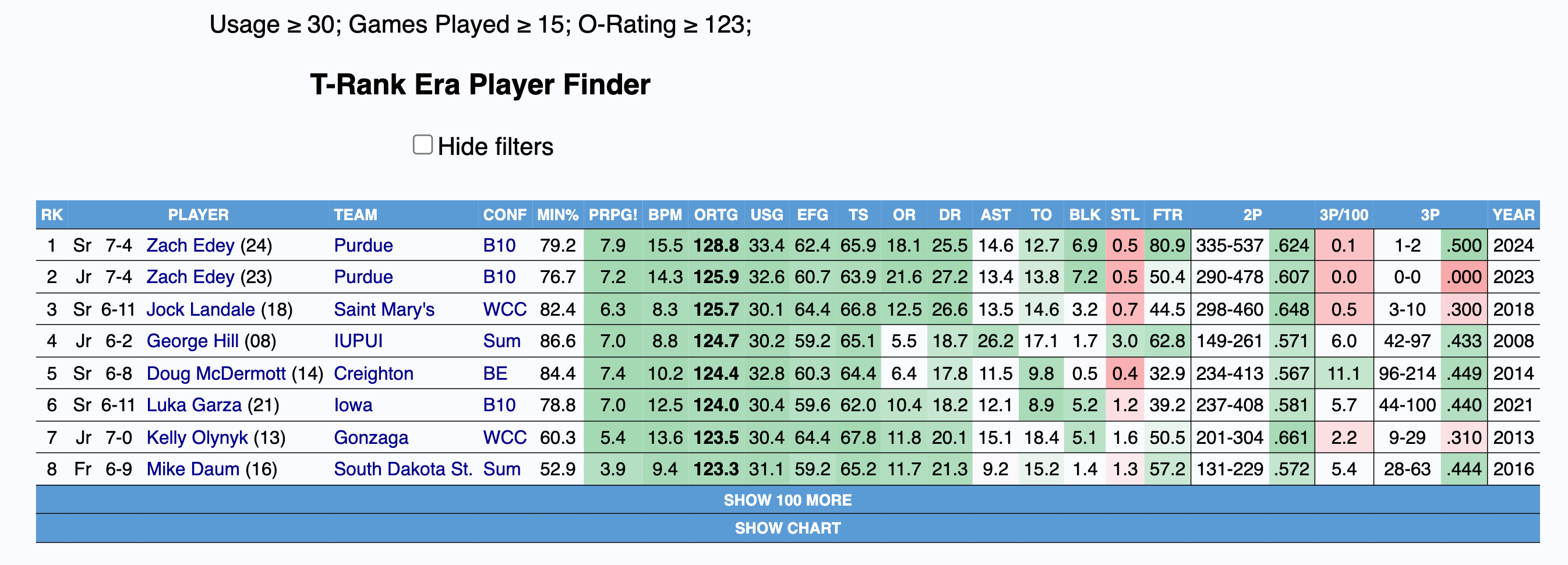
Pretty much the only guy in the bart era to do this is Zach Edey. The only guard to even remotely come close is George Hill, who was a whole otrg point lower while 3 usage points lower.
Minard seems like a better version of George Hill. More efficient, bigger George Hill with better blocks and steals is a hell of a player
Ok, so this guy was invited to the combine, showed out, and was selected in the second round.
Surely he had some sort of decent NBA career right?
Well, Ricky never played in the NBA. He had a decent summer league run in 2006, and he was doing well in the D League before making the jump that season to La Lega.
So, did Ricky crush international hoop?
Again, not really.

Ricky pretty much plateaued. He wasn’t scoring efficiently, his offensive rebounding advantage wasn’t as pronounced, his blocks were pretty muted, and most importantly, he wasn’t able to produce strong offense. He was putting up mediocre offensive ratings, especially relative to those leagues, and he wasn’t able to even crack 20% assist until his 30s. By PER he was a slightly above average player for his entire career.

In terms of scoring, we can see that Ricky never really blossomed into am efficient shooter. His 55% 2P in college was obviously inflated, and he wasn’t efficient enough inside the arc to justify as many attempts inside the arc. As a shooter, it never completely clicked for Ricky- he started really slow from 3, and his FT% was far below his college averages. All in all, Ricky was an inefficient combo guard: he was able to put up high volume scoring, but had replaceable efficiency both inside and outside the arc.

The rebounding really didn’t translate: Ricky only had a handful of seasons even above 1 offensive rebound. The TOs were a big deal, and we can see just how bad of a passer Ricky was: he couldn’t even muster a neutral A:TO for much of his career. The FTR was fine but lower than expected, but at least he was racking up steals with some consistency.
Here’s the bottom line: Ricky was not good enough of a facilitator to play the 1 (very poor A:TO), but he was too inefficient to be a gamechanger at the 2. He did start in Europe for most of his career, but he especially wasn’t a good enough shooter to be more than a slightly above replacement player at best. After all, he was a bit undersized to play the 2, and inefficient combos who turn it over are perhaps the most overrated archetype in this sport.
But why? Why was Ricky unable to replicate his magic in Europe. THE Ricky Minard, who led such an efficient collegiate offense with strong passing, a:to, and elite rebounding/stocks for size?
Well, the obvious answer is variance. NBA GMs were especially bad at their jobs in the 2000s, and it was still en vogue to hire former players who didn’t really know how to manage organizations. Ricky’s hesitance to stick around in the D League is pretty telling about how little he expected of his NBA career. I would expect Minard to stick around for far longer, at least in the G League for a bit, and personally he would be high on my board just off my anthropometrics/team impact philosophies.
Even so, Minard’s underwhelming European stint relative to my post hoc expectations is still something. I have two potential red flags.
First off, perhaps we should make more of Minard’s less-productive senior season. It was a solid season, but a far cry aways from his historically good 2002-03 junior season. I would just blame season-to-season variance, but I suppose there’s an argument that this was a Marquis Sykes issue. If you compare the 2002-03 and 2003-04 seasons (see the images at the beginning of the section), the biggest loss would undoubtedly be Marquis Sykes, the All-OVC Third Team selection who led the team in assists
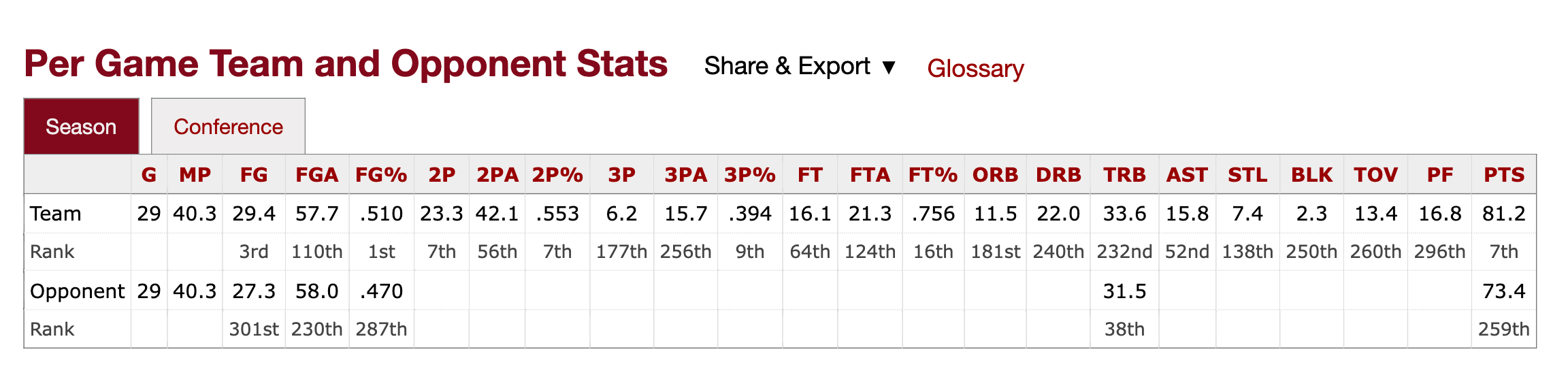
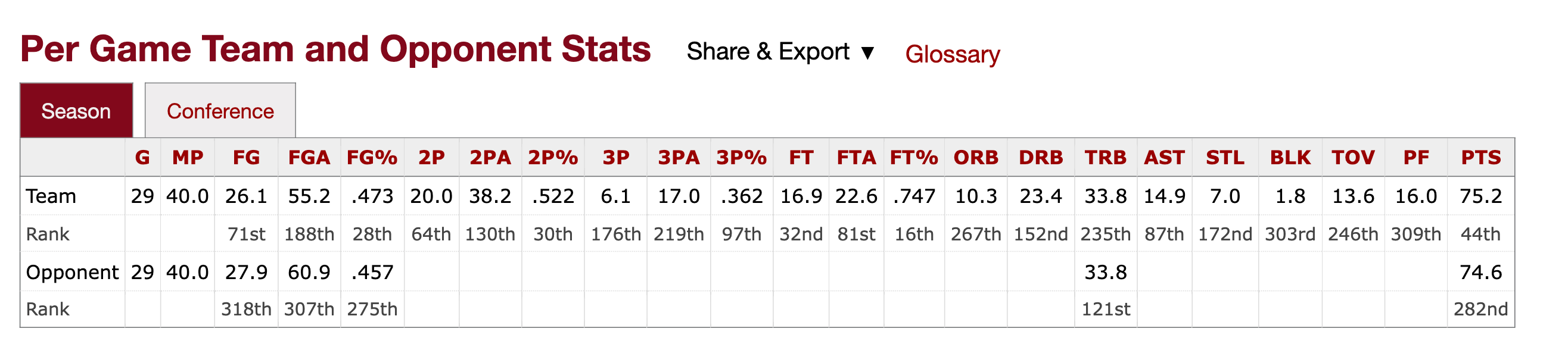
From 2003 to 2004, there really wasn’t that much of a difference in team tendency. Probably the biggest culprit is 4 fewer 2PA attempted per game, with lower 2P% and 3P%. Slight rise in 3PA, but generally 1 less assist per game with 2.5 fewer FGA attempted is interesting, especially since they had the same pace both seasons. Same pace yet overall scored 6 points less per game!
Also, they allowed 2 more rebounds and 2 more FGAs in 2004 vs 2003, but only allowed 1.2 more points per game. Their KenPom luck rating rose from 60th to 20th. So there’s a good chance that Morehead’s 2004 numbers could have been even more dramatically worse than they ended up being.
So, it does seem like the quality of assists decreased in 2004, but it’s still hard to make the judgement that this is directly due to Sykes’ departure. Despite leading that 2003 team in assists, Sykes had a low usage rate, likely by virtue of his inability to draw fouls and low volume shot diet. His 109.8 otrg for a team with overall 120.4 otrg is pretty bad, but even worse considering his measley 17% usg. This is a pretty big dent in the “Sykes was the understated engine of the historic 2003 team” case, but I think there’s enough circumstantial evidence to still possibly argue that. Very little team turnover beyond the third team All-OVC Sykes, who happened to lead the team in assists. If there was a non-regression related reason for the decline, it would have to be Sykes right?
Red flag #2: Minard was never a projectable point guard to begin with.
There’s been a lot of midmajor point guards that have fooled people over the years. Grant Riller is prolly the most painfully obvious fake point guard, but Jerome Robinson is another decent shout. This is basically the combo guard forced to play a high usage role on a terrible team and racking up assists by virtue of high usage, not because of great vision. Let’s look at two elite midmajor point guard prospects, and then Minard.
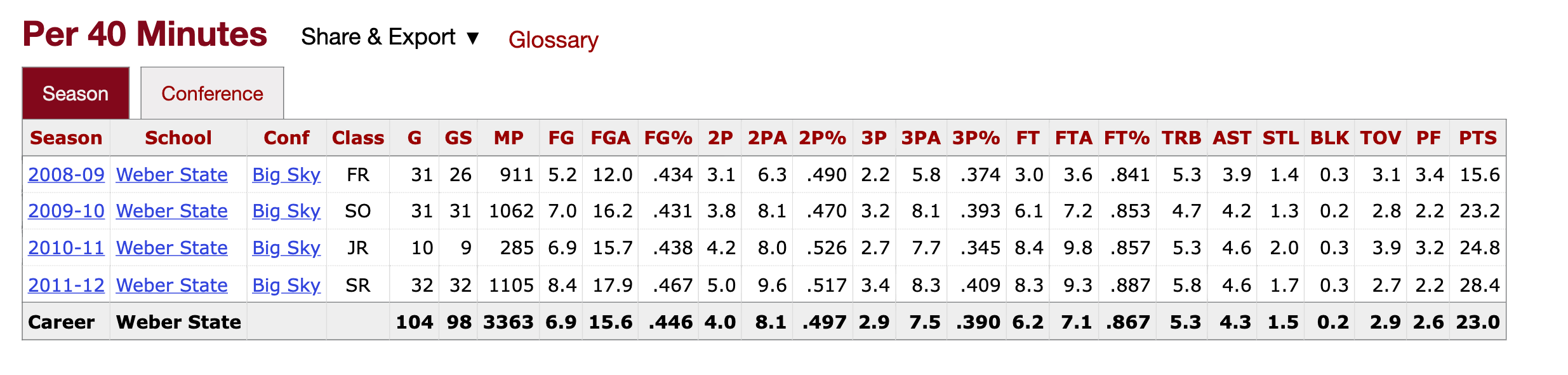
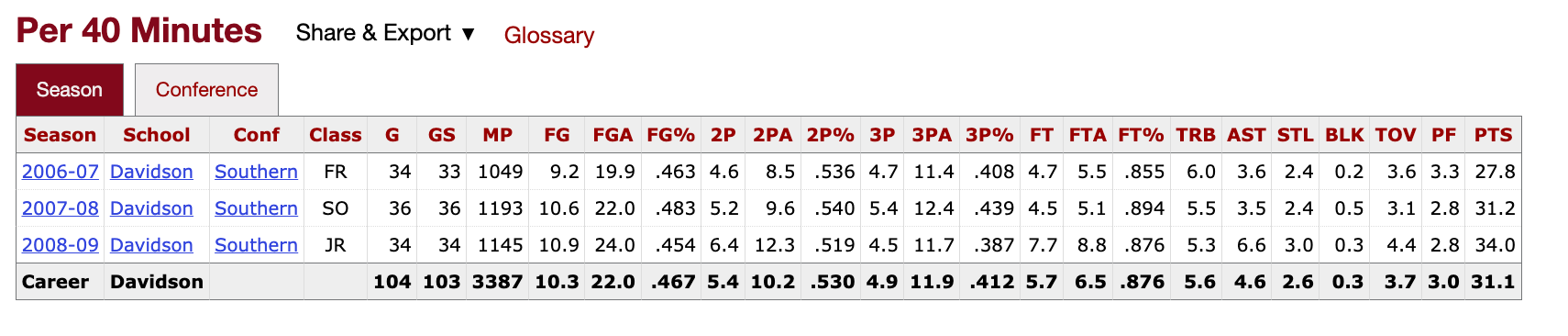
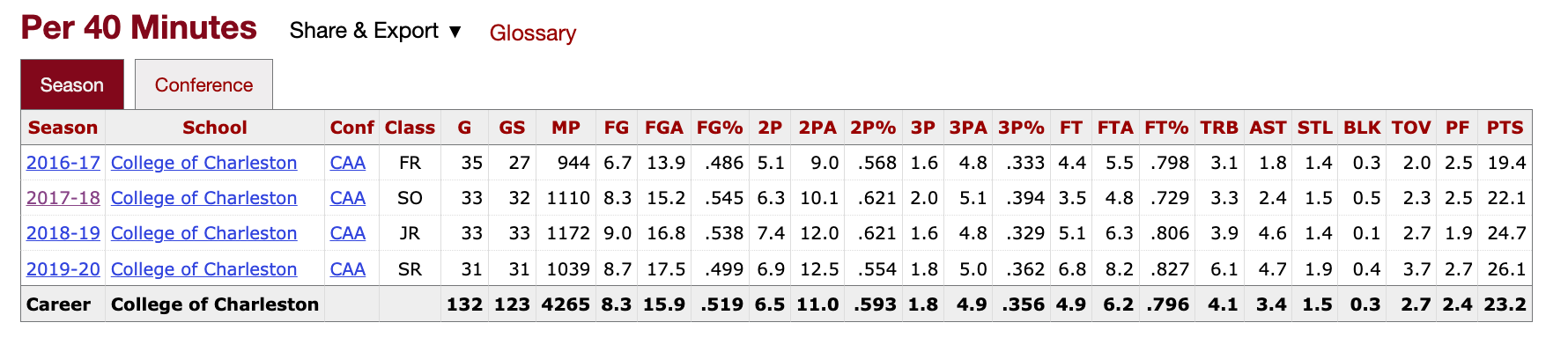

That is Dame, Curry, Riller, and Rinard, respectively.
This is super obvious. Dame and Steph were both > 3 assists/40 min as freshmen, and they never had A:TO under 1. Riller and Rinard were both < 3 assists/40 min as freshmen, and they both had A:TO under 1 as freshmen. In fact, Riller was so bad that he didn’t break 3 assists til his junior year, and he never peaked above 5 assists/40 min.
Another key difference: Dame and Curry were absolutely elite shooters. Both were above 85% FT for their CAREER, and they were in the mid 80s as soon as their freshmen year. In comparison, Riller and Rinard had an identical 79.6% FT, and they never came close to 85% FT in any single season.
Rinard was a great, winning prospect, but these midmajor types need to be evaluated with greater rigor. If you’re playing at a midmajor school, you have to be an elite shooter and passer out the gate as a freshman. You seriously cannot be putting up these sub 1 A:TO seasons in low major conferences at any point.
How about those George Hill comparisons? Well, George Hill was a good player, and there’s a good chance Rinard could have parlayed his production into a George Hill type career in the modern era. Hill is top 8 in VORP, BPM, WS/48, and career WS in a decent draft, so he’s definitely still someone you take a chance on. But man, look at George Hill’s career college stats.
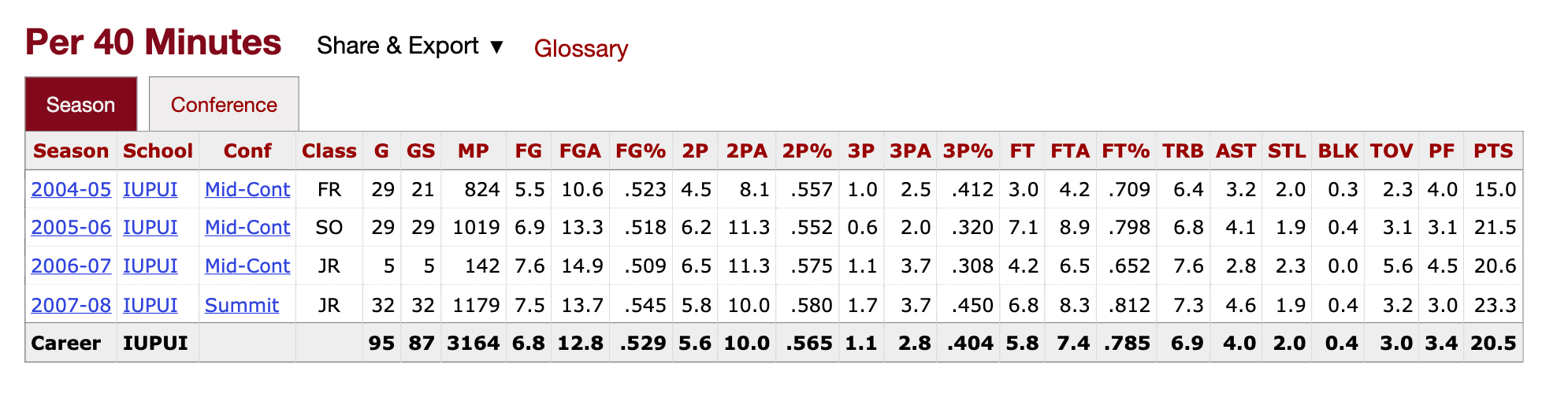
Not the best FT shooting track record, but Hill was a sniper from downtown and he ended up with 53% FG for his college career. Higher than anyone we mentioned so far. Plus, he was a real point guard, with a strong 3.2 assist:2.3 TO as a freshman.
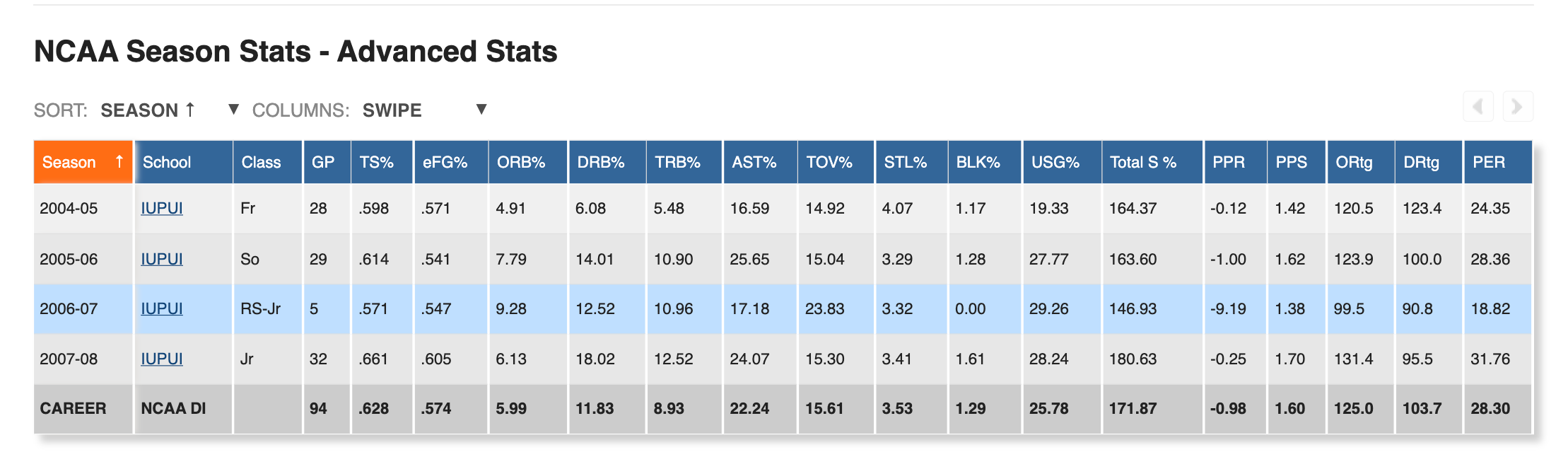
And… there was more robustness in his production. Yes, that 125 otrg/33 usg junior season was absolutely elite from Minard, and prolly a bit more impressive than Hill since Hill wasn’t operating at that kind of usage. But Hill had two ridiculously efficient seasons, one of which before he turned 20: 124 otrg on 27 usg and 131 otrg on 28% usg. His production was simply easier to project. This is a pretty important lesson in considering ALL priors. Minard’s poor followup season holds just as much evaluative utility as his original linsanity season.
Are we really THAT surprised that Rinard wasn’t a crazy good shooter in Europe? Are we surprised he hovered in the 70s FT% his whole career? Are we surprised that he was turnover prone and couldn’t play efficient offense at any point in his European career? Rinard was an absolutely sick prospect, someone who I might easily take a chance on in the first round pretty much every year. But this is a really important lesson in considering priors AND posteriors, while also being cognizant of the ridiculous thresholds that low major guards need to meet to stick long-term in the NBA.
Anderson Varejao
Birthday: September 28, 1982
Class: Freshman
Draft Age: 19.0
Height: 6’10
Weight: 273 lbsVarejao was so sick. This was an OREB/STEALS demon.

Pretty bad TS for a non-shooter but 3% steal+3% block in the Euroleague at 21 is really something. AT 6’10 ~250 lbs WHEW. Special special awareness

This is soooo sick. This was his 2013 season, one of 2 seasons with 2+ EPM.
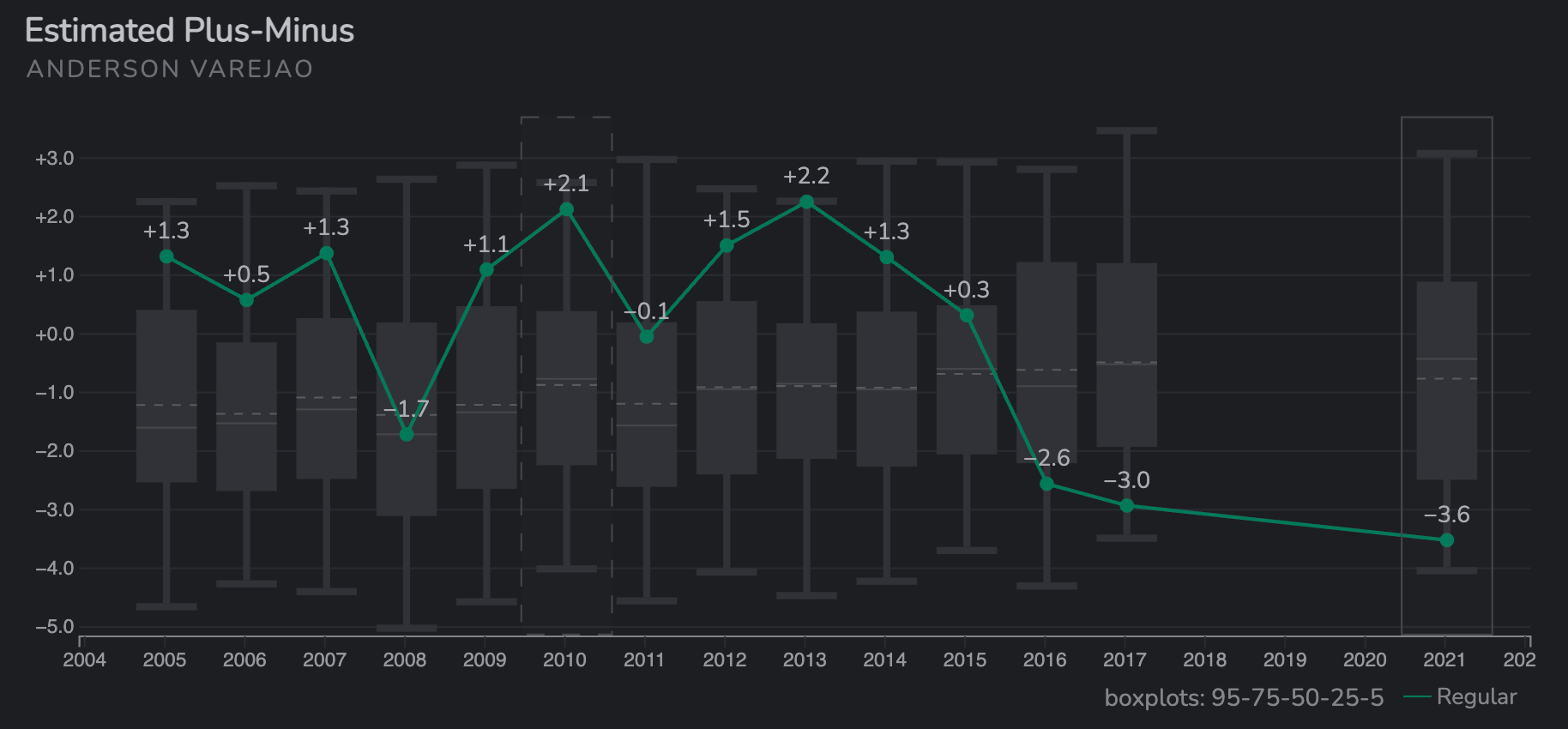
Two seasons of 2+ EPM + a screen named after you is a helluva career.
It is unfortunate that Varejao was never developed as a shooter.

He went from 62 3PA/339 FGA in age 20/21 season to…
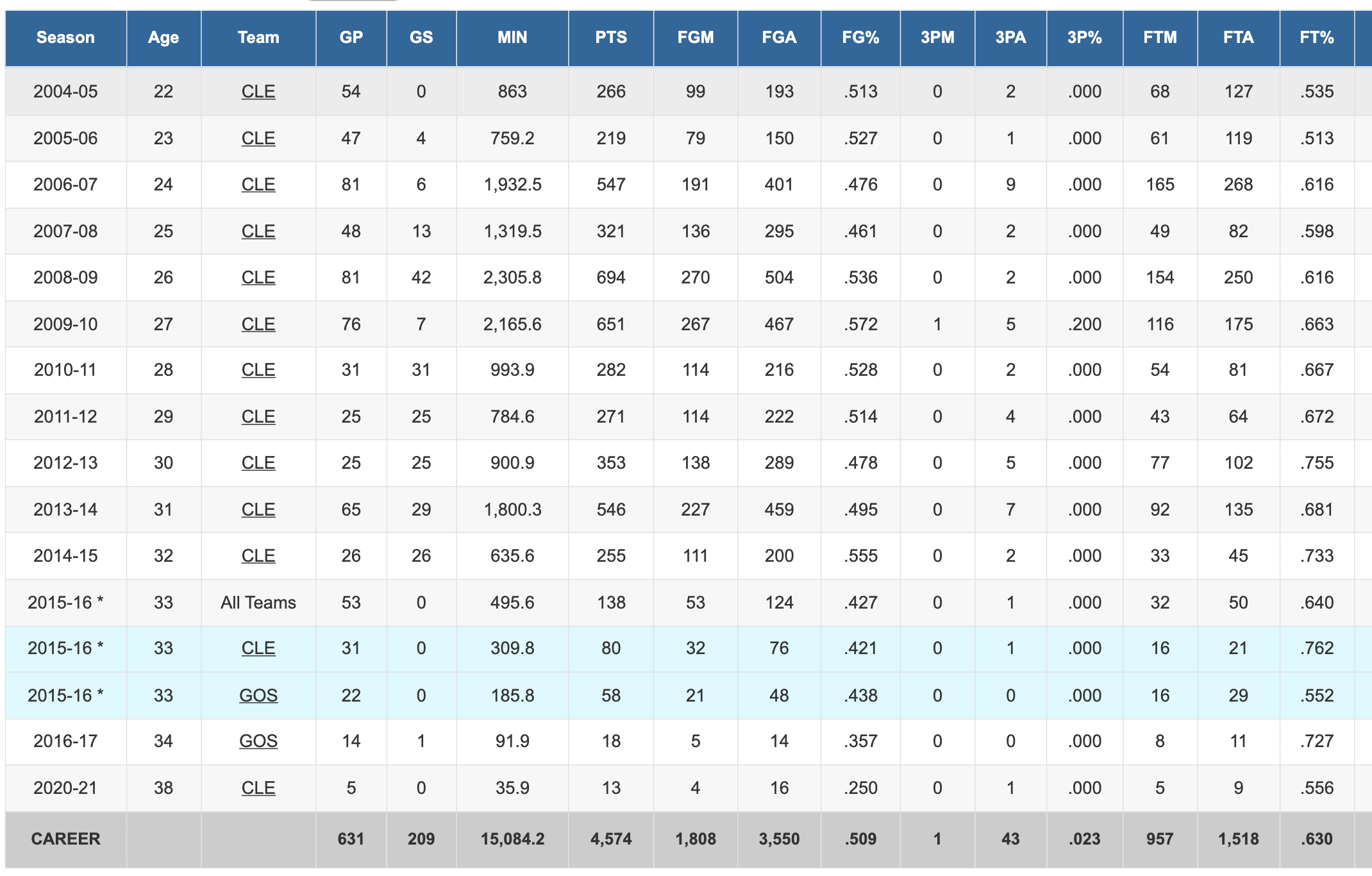
Varejao with a strap would have been one of the dopest players ever. He was definitely underrated because of that 2013 season being on that terrible Cavs team.
Devin Harris
Birthday: Feb 27, 1983
Class: Freshman
Shoeless height: 6’1.75
SR: 8’2.5
Weight: 170
WS: 6’3
Lane Agility: 11.30
3Q Sprint: 3.19
Standing Vert: 30.5
Max Vert: 37.0
Bench Press: 50.6 bpm + .110 WS/100
I’m a bit surprised Devin Harris was drafted 5th overall. The profile was really good and highly efficient, but don’t think he would have even been a lotto lock in these days. Maybe with junior theory he could have been a decent candidate.

Three things I notice:
Efficient shotmaking. Hitting 61% TS on 28% usg is nuts
Great positional rebounding. career 14% dreb + 2.5% oreb for a guy listed at 6’3 is pretty impressive, as is 1.1% career block
TO god: Just 11.6% TO on 28% USG, and he forced a career 3.5% steal. This is the exact type of player I’d target.

Such an ethical shot profile. Career 48 3PR on 78% FT. Career 2.3 FC/40. This is the epitome of efficiency.
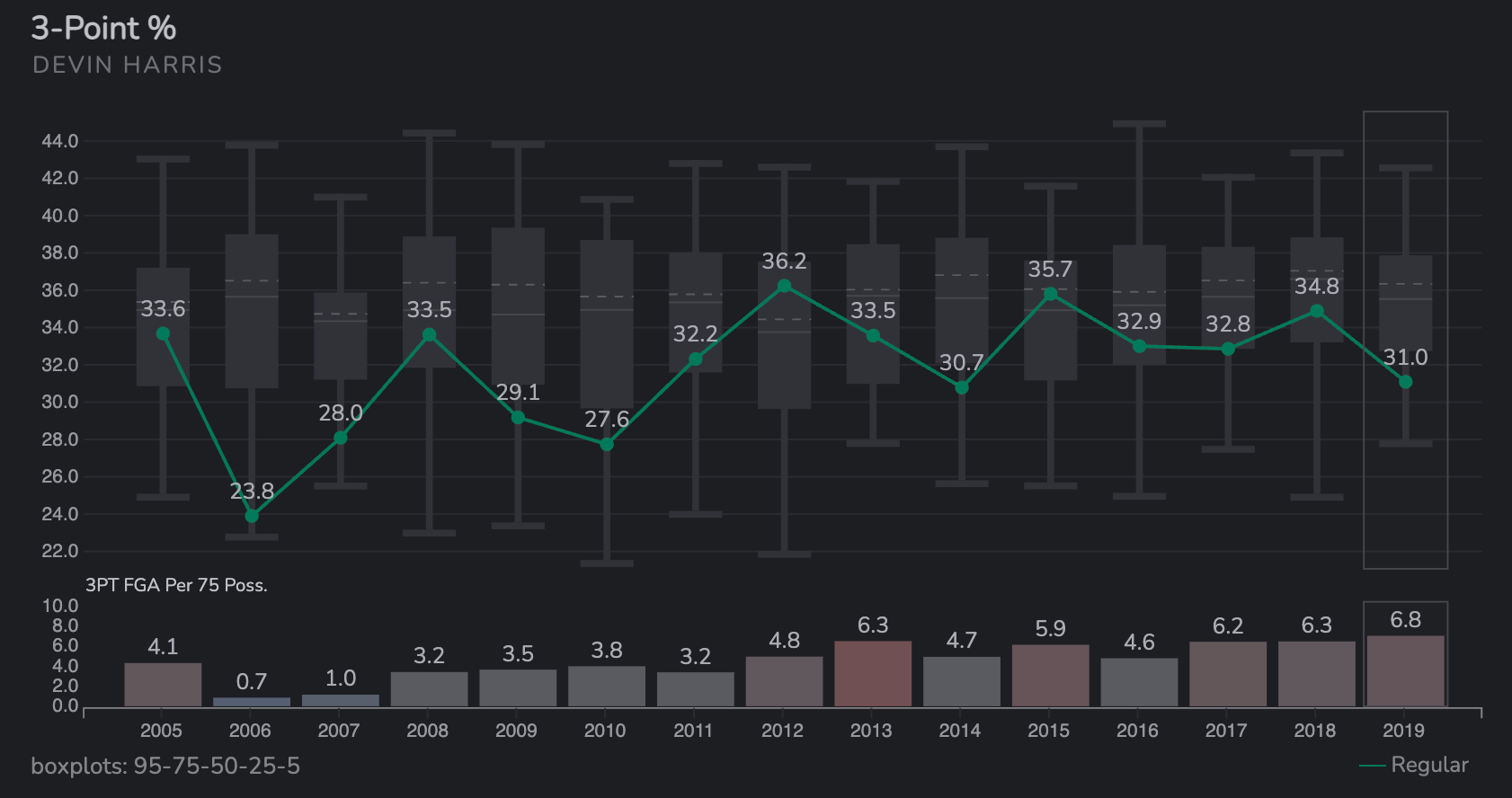
What’s interesting is that despite getting the 3s up at a decent clip, Harris never really shot that well on volume. It didn’t matter tho; Harris was an impact demon…
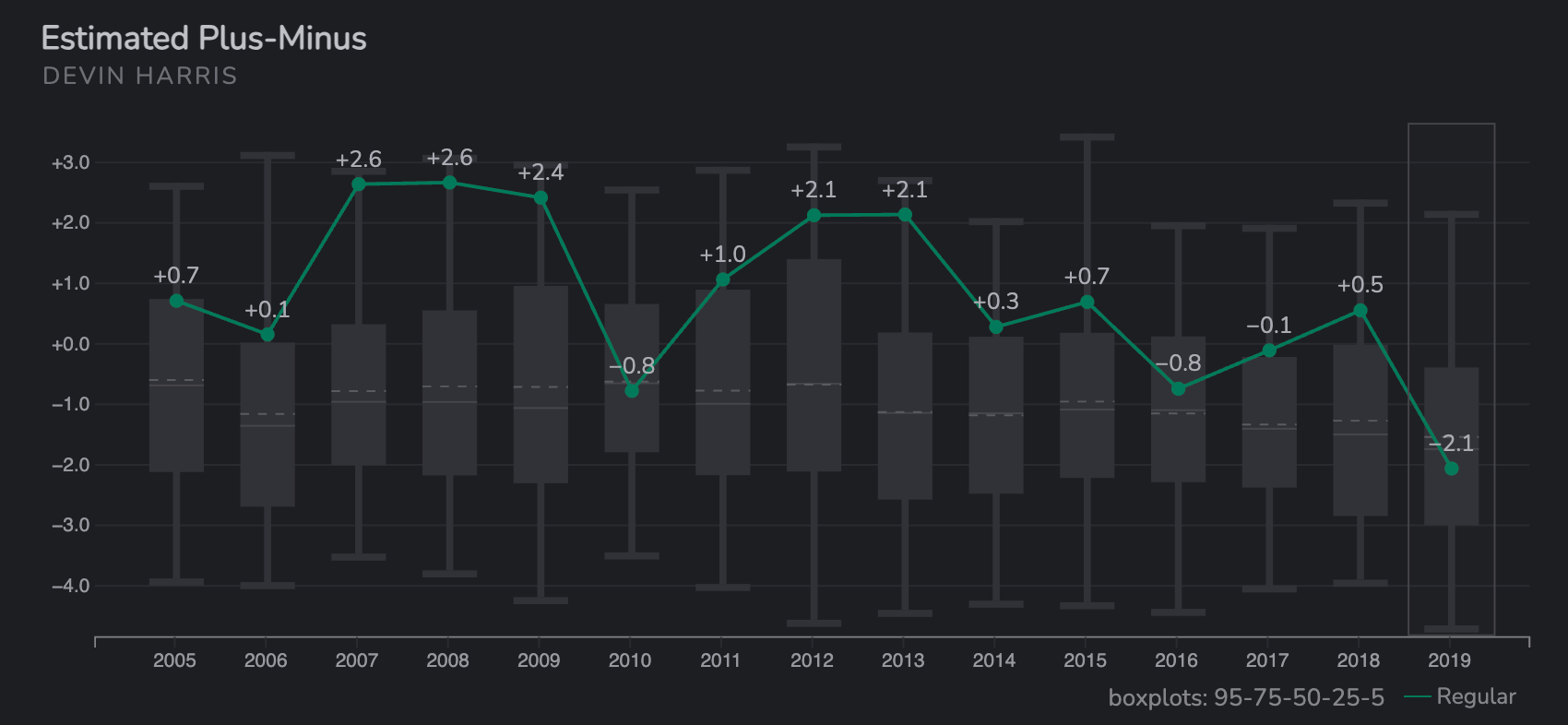
5 separate seasons of 2+ EPM is special stuff. That 2007-2013 peak was really great.
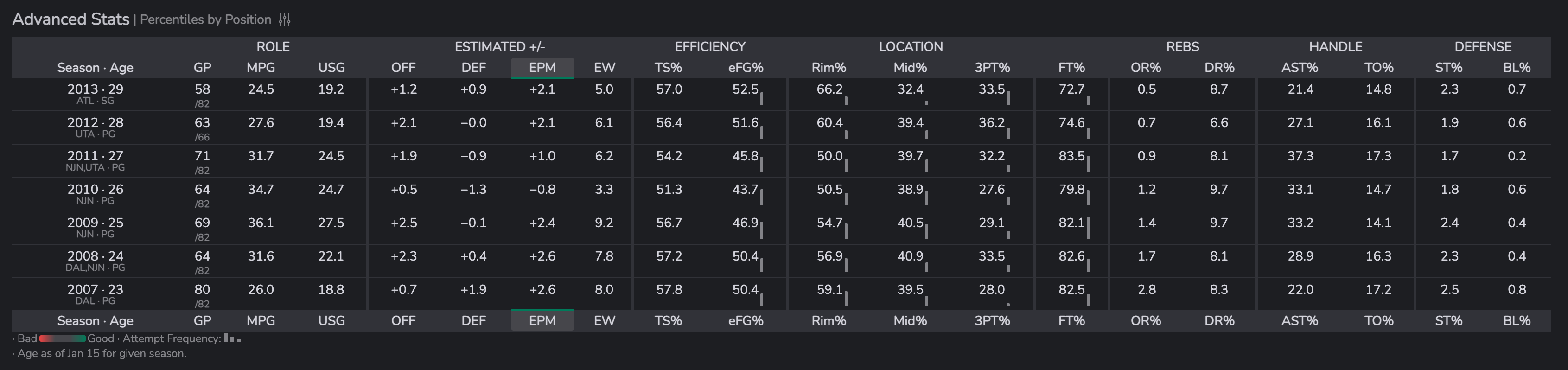
During that peak, he was just consistent. Some good defensive seasons, but the overwhelming trend is efficient shotmaking (57% TS maxxed) and solid passing in a mid usage role.